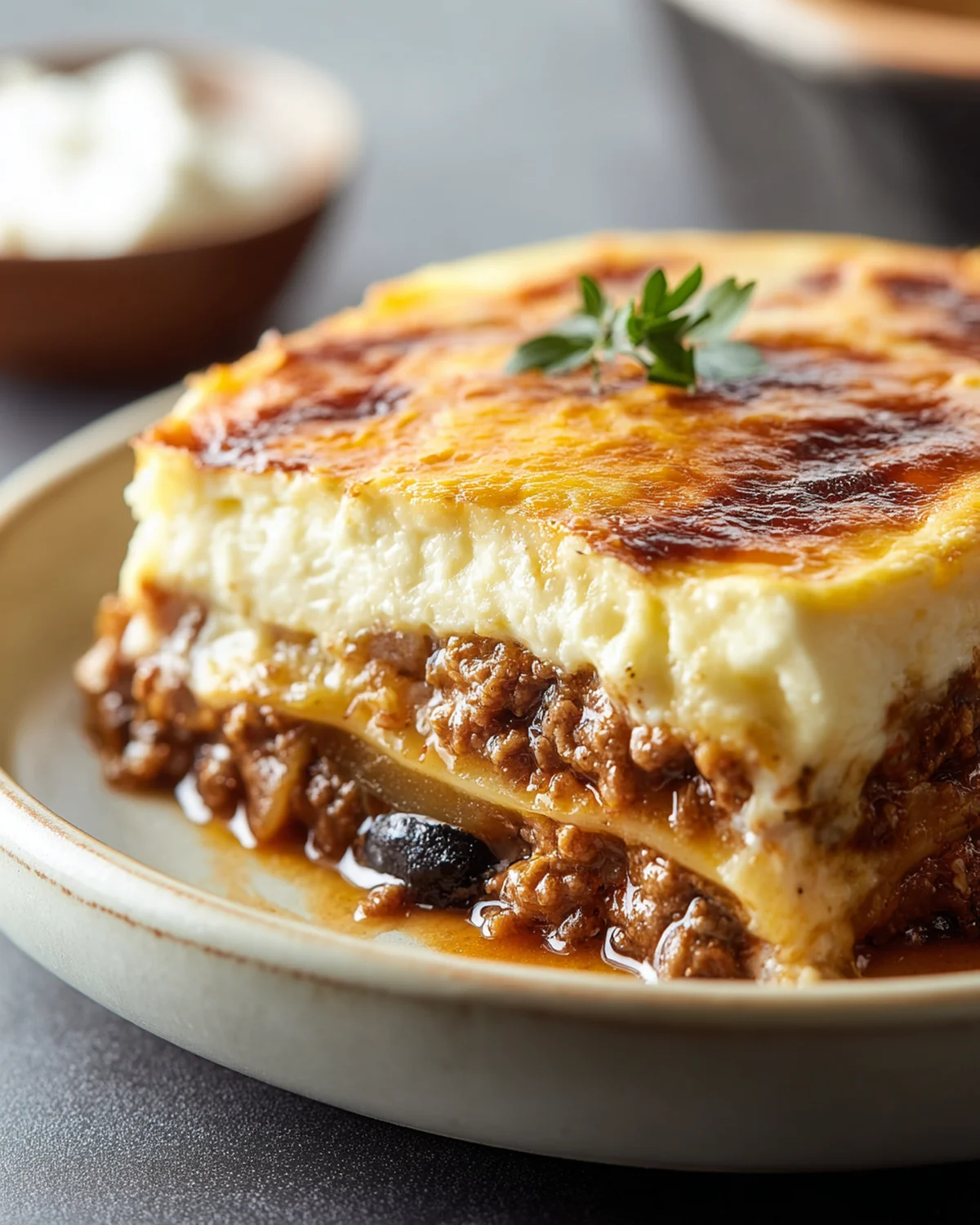
Outrageously Delicious Greek Moussaka
Table of Contents
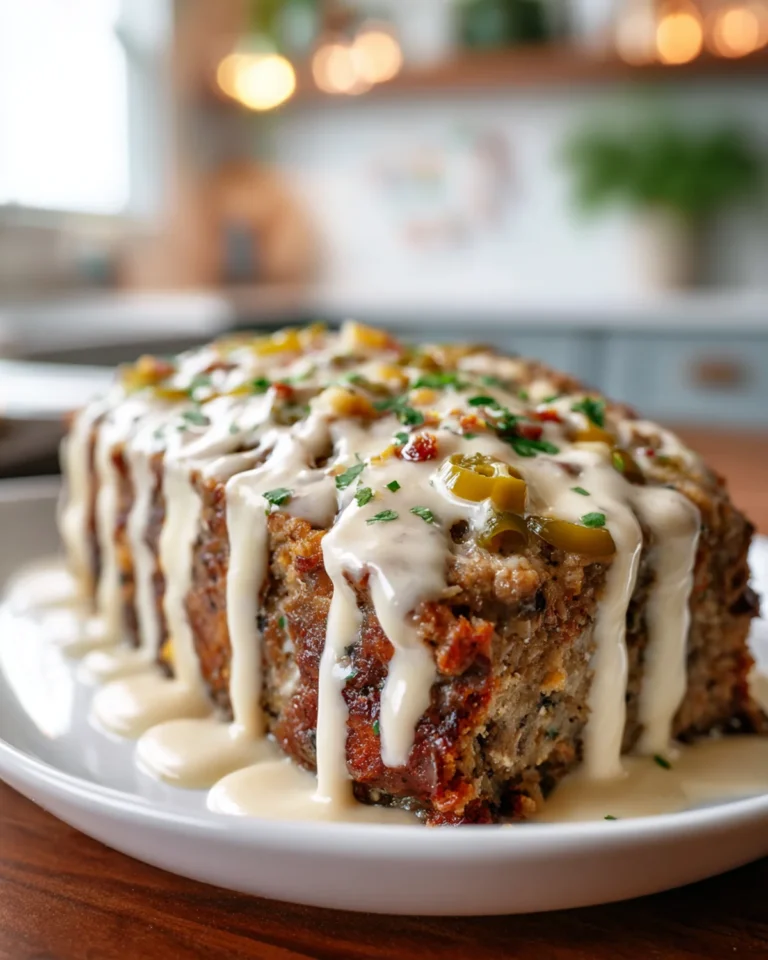
When I think of comfort food, my mind drifts back to my grandmother’s cozy kitchen, where the aromas of hearty dishes would fill the air, wrapping us in a warm embrace. One of those unforgettable dishes is Greek Moussaka — a casserole that is as delightful to eat as it is to share with family and friends. This particular recipe, Outrageously Delicious Greek Moussaka, holds a special place in my heart. Not only is it a tribute to those timeless family gatherings, but it also offers a medley of flavors that dance gracefully on the tongue. Imagine layers of golden-brown eggplants, zucchini, and potatoes, each slice crisped to perfection, cradling a rich, flavorful meat sauce that whispers of red wine and fragrant spices. Topping it all is a heavenly bechamel sauce that is smooth and creamy, its nutmeg-infused aroma inviting you to savor every bite.
Why is this recipe so special to me? Well, it’s more than the sum of its ingredients. It’s about the joy of creating something from scratch, the nostalgia of watching the casserole bubble away in the oven, and the satisfaction of seeing smiles around the table as everyone digs in. It’s the kind of dish that transforms simple moments into cherished memories, where the act of cooking becomes a shared experience, a conduit for love and togetherness. And the beauty of this moussaka is its adaptability; whether you’re a seasoned cook or just beginning your culinary journey, this recipe is designed to be approachable and rewarding in every way. So, let’s roll up our sleeves and create some magic in the kitchen together.
Why This Recipe Should Be on Your Table
Outrageously Delicious Greek Moussaka isn’t just another dish; it’s a culinary experience that brings a unique twist to traditional comfort food. Here’s why it deserves a spot on your table:
Rich, Layered Flavors: Each bite offers a symphony of tastes, from the savory meat sauce to the creamy bechamel, all harmonizing perfectly. The layers of vegetables add a depth of texture and a hint of sweetness when caramelized, balancing the robust flavors of the ground beef and spices.
Family Tradition: This recipe is steeped in the tradition of gathering loved ones, making it ideal for family dinners and celebratory occasions. Sharing moussaka can become a cherished ritual, a dish that ties generations together with its history and the joy it brings to the table.
Versatile Ingredients: With substitutions like Parmesan or Kasseri cheese, you can tailor this dish to suit what’s available in your pantry. If eggplants aren’t your favorite, try substituting them with sliced mushrooms for an earthy twist. The recipe’s flexibility means it can be adapted to suit dietary preferences and available ingredients.
Warm and Comforting: Perfect for any season, this dish provides a warm embrace on a chilly evening, yet is light enough to enjoy year-round. The creamy, nutmeg-scented bechamel ensures that each serving brings comfort, evoking the soothing warmth of a home-cooked meal.
Kitchen Tools to Make This Recipe Easy Peasy
To whip up this delightful dish, you won’t need much — just a few trusty kitchen tools, much like the ones my grandma used when teaching me the joy of homemade meals:
Frying Pan: Essential for browning the vegetables to perfection, bringing out their natural sweetness. A well-browned vegetable layer is key to adding depth to the moussaka, and a non-stick frying pan can make this task much easier.
Large Pot: Perfect for simmering the meat sauce, allowing all the flavors to meld beautifully. A heavy-bottomed pot will distribute heat evenly, ensuring the sauce doesn’t burn and develops a rich, deep flavor.
Saucepan: Necessary for preparing the creamy bechamel sauce, ensuring a smooth, lump-free consistency. Whisking constantly as the sauce thickens is crucial for achieving that velvety texture.
Baking Dish: To layer and bake the moussaka until golden brown and bubbling. Choose a dish with high sides to accommodate the layers and allow the top to crisp beautifully.
Cheese Grater: For finely shredding the Kefalograviera cheese, adding that irresistible cheesy layer. Freshly grated cheese melts better and offers a superior flavor compared to pre-grated options.
How to Make This Recipe Easy Peasy
Ingredients
Vegetable Base
- 2 cups olive oil for frying (varies depending on pan size)
- 4 potatoes
- 4 zucchini
- 4 eggplants
- 200 grams Kefalograviera cheese, finely shredded (substitutes: parmesan, kasseri, or pecorino)
- 1 tablespoon salt
- ½ tablespoon pepper
Meat Sauce
- 2 tablespoons olive oil
- 1 large red onion, finely chopped
- 1 medium-sized garlic bulb, minced
- 1 kg beef mince meat
- 1 cup red wine
- 800 grams crushed canned tomatoes
- 1 tablespoon salt
- ½ teaspoon white pepper
- ½ teaspoon ground cinnamon
- ½ teaspoon ground nutmeg
- 2 teaspoons sugar
- ½ teaspoon thyme
- 1 teaspoon oregano
- 3 bay leaves
- 1 bunch fresh parsley, finely chopped
Bechamel
- 150 grams unsalted butter
- 1 cup plain flour
- 1 litre milk
- 2 egg yolks (keep whites for breakfast 😋)
- ½ teaspoon nutmeg
- 250 grams Kefalograviera cheese, finely shredded (substitutes: parmesan, kasseri, or pecorino)
Instructions
Slice the potatoes, zucchini, and eggplants into circular disks. Even thickness ensures even cooking, so aim for slices about ¼ inch thick.
Heat olive oil in a frying pan over medium-high heat and fry vegetable slices until golden brown. This step is crucial for developing flavor and texture — don’t rush it! Cook in batches if necessary, and avoid crowding the pan.
Remove fried vegetables from the pan and place on paper towels to drain excess oil. Lightly season them with salt and pepper to enhance their natural flavors.
In a large pot, heat olive oil over high and sauté onion and garlic until soft. This creates a flavorful base for the meat sauce, with onions providing sweetness and garlic adding depth.
Add beef mince, cook until browned, and pour in red wine, simmer until mostly evaporated. The wine adds acidity and complexity, enhancing the meat’s richness.
Stir in crushed tomatoes, salt, spices, herbs, and simmer for 10 minutes. The combination of cinnamon and nutmeg is quintessentially Greek, lending warmth and subtle sweetness to the sauce.
In a saucepan, melt butter over medium heat, stir in flour to form a paste. This is called a roux, and it’s the foundation of the bechamel sauce.
Gradually add milk, stirring constantly, until thick and creamy. Keep stirring to prevent lumps and achieve a silky smooth texture.
Stir in egg yolks, nutmeg, and cheese into the bechamel sauce until combined, then remove from heat. The yolks enrich the sauce, while the cheese adds a savory finish.
Preheat oven to 165°C (fan-forced).
Layer potatoes in a baking dish, season, and sprinkle cheese. Repeat with eggplant, zucchini, and remaining eggplant. This layering is critical for the classic moussaka experience, with each layer seasoned to perfection.
Pour meat sauce over layered vegetables, spreading evenly. Make sure it reaches all corners to infuse every bite with flavor.
Top with bechamel sauce, spreading evenly over meat sauce. The bechamel should cover the entire surface, forming a luscious, creamy top layer.
Bake for 40 minutes or until top is golden brown. Let cool for 30 minutes before slicing. Serve and enjoy! Cooling allows the layers to set, making serving easier and ensuring each slice holds its shape.
Difficulty: Medium • Cuisine: Greek • Preparation Time: 45 minutes • Cooking Time: 1 hour 10 minutes • Total Time: 1 hour 55 minutes • Calories: 600 • Servings: 8
Note: For a vegetarian version, substitute the beef with lentils or mushrooms for a delicious alternative. Lentils provide protein and heartiness, while mushrooms add umami depth.

Health and Flavor Benefits of Ingredients
These Outrageously Delicious Greek Moussaka not only promise delightful flavors but also come with some surprising benefits:
Eggplants: Rich in antioxidants, eggplants provide a great source of fiber and vitamins. They’re low in calories and can help reduce the risk of chronic diseases.
Olive Oil: Known for its heart-healthy properties, it adds a rich depth of flavor. It’s a staple of the Mediterranean diet, which is linked to numerous health benefits, including reduced inflammation.
Red Wine: Adds complexity to the meat sauce while offering antioxidant benefits. In moderation, it can improve heart health and enhance the dish’s depth of flavor.
Tomatoes: Packed with vitamin C and antioxidants, they enhance the dish’s savory profile. Lycopene, found in tomatoes, is associated with reduced cancer risk.
Kefalograviera Cheese: Provides a rich, nutty flavor while delivering calcium and protein. It’s a traditional Greek cheese that melts beautifully, adding body and richness to the dish.
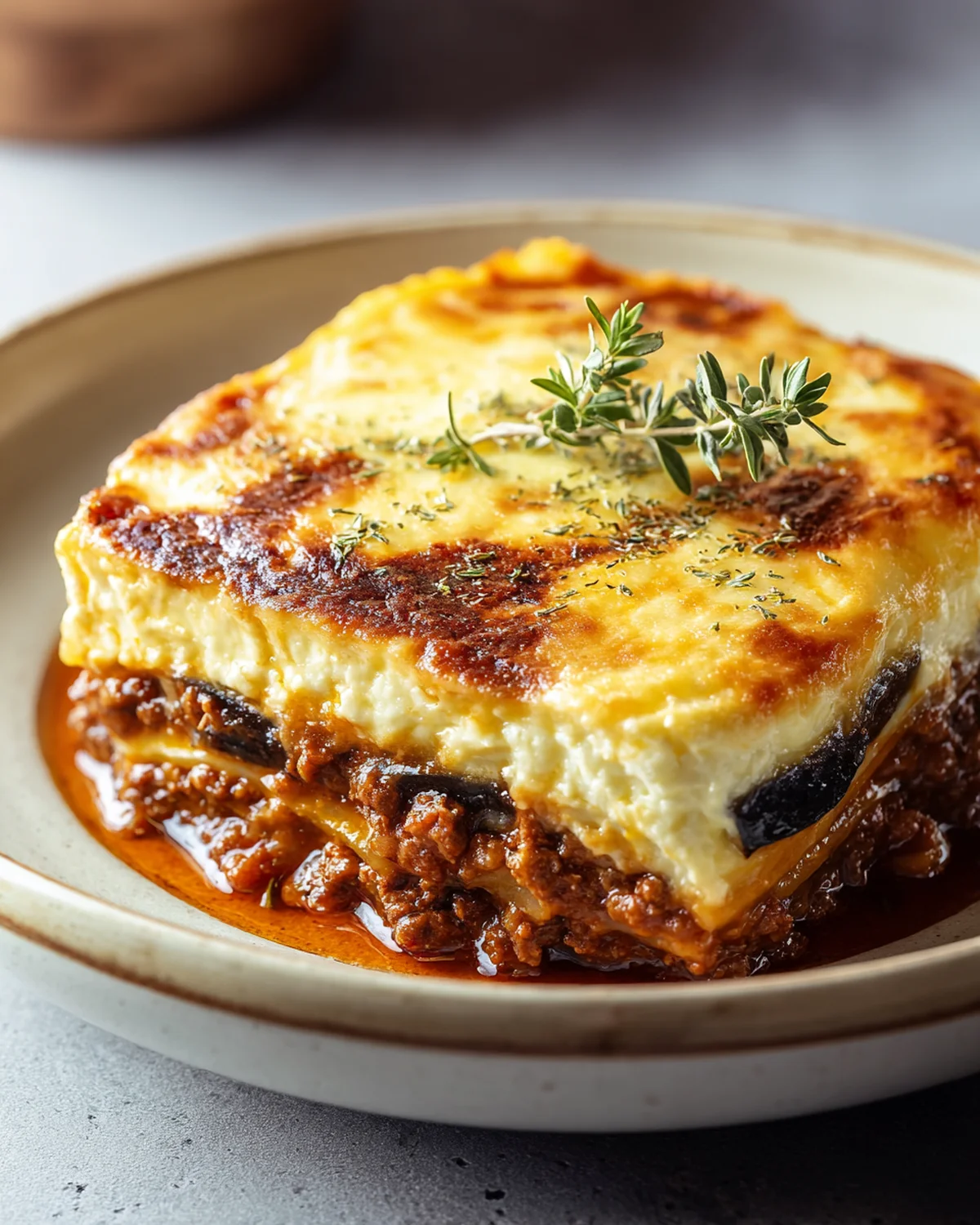
Tasty Pairings to Serve with This Easy Peasy Dish
These moussaka layers are versatile companions to various beverages and dishes, making them perfect for any occasion:
Greek Salad: Crisp, fresh vegetables with feta cheese complement the richness of the moussaka. The tangy dressing and briny olives provide a refreshing contrast.
Crusty Bread: Ideal for soaking up the flavorful sauces. A good, crusty bread can turn a meal into a feast, perfect for sopping up every last bit of sauce.
Red Wine: A robust red pairs beautifully with the dish’s hearty flavors. Consider a Greek red like Xinomavro for an authentic touch.
Tzatziki Sauce: A refreshing cucumber and yogurt dip that adds a cool contrast to the warm casserole. Its tanginess cuts through the richness, balancing the meal.
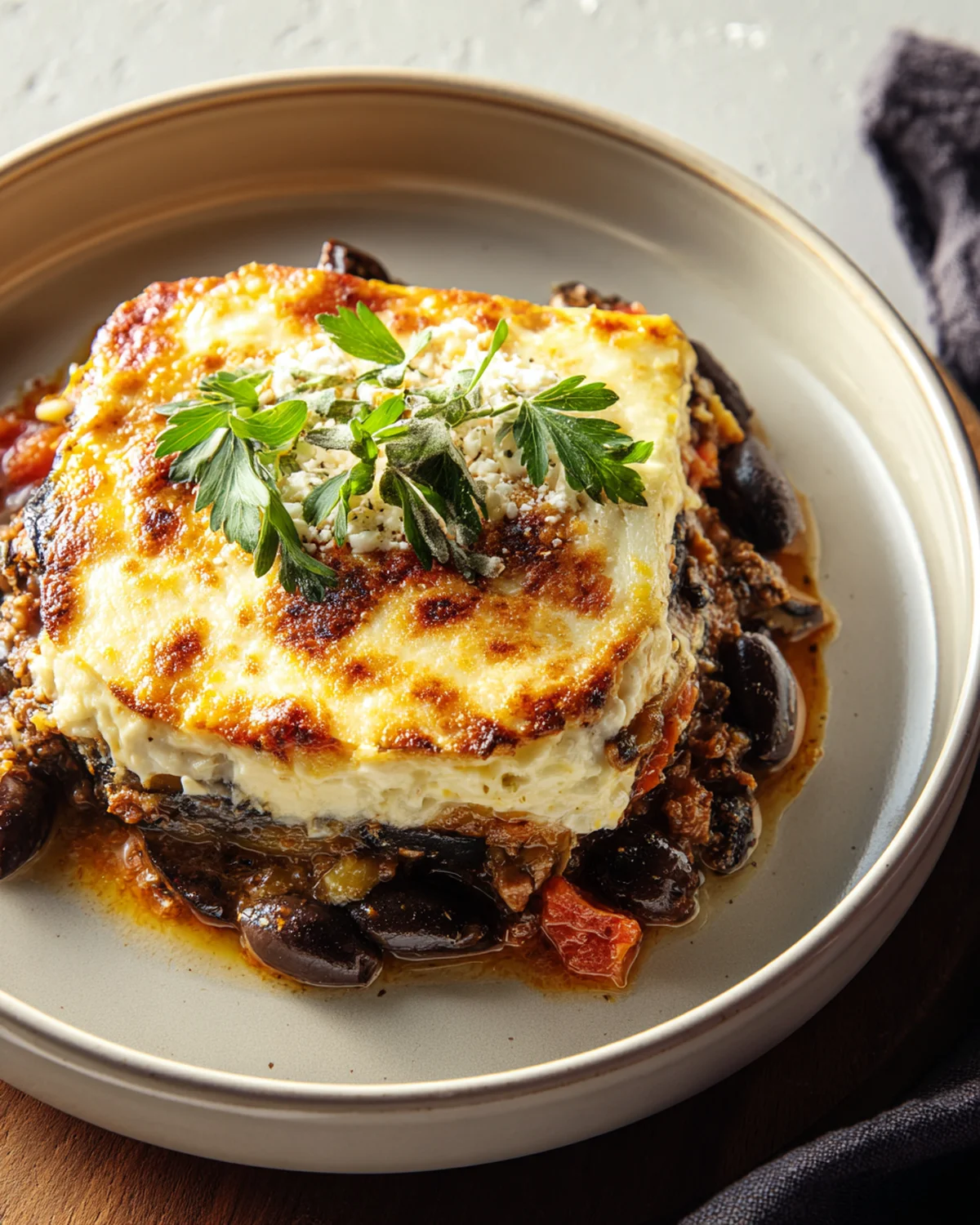
Storage Tips and How to Enjoy Leftovers the Easy Peasy Way
Once you’ve savored your delicious Greek moussaka, you might find yourself with some leftovers—lucky you! Here’s how to store and enjoy them:
Refrigeration: Store any leftover moussaka in an airtight container in the fridge for up to 3 days. This will keep it fresh and maintain its complex flavors. It’s a dish that often tastes even better the next day as the flavors meld together.
Freezing: If you want to extend the shelf life, moussaka freezes beautifully. Wrap individual portions tightly in foil and place them in a freezer-safe container. They can be stored in the freezer for up to 2 months. Thaw overnight in the fridge before reheating.
Reheating: For best results, reheat moussaka in the oven at 160°C until warmed through. This will help maintain its texture and avoid sogginess. If you’re in a hurry, the microwave works too—just be sure to cover it to keep moisture in.
Creative Leftovers: Transform your moussaka leftovers into a hearty lunch by stuffing them into a pita or serving over a bed of fresh greens for an instant moussaka salad. This adds variety to your meals and makes the most of your delicious homemade moussaka.
The magic of homemade meals doesn’t just end with the last bite. It lingers in the laughter, the stories shared, and the warmth felt long after the dishes are cleared. So, whether you’re making this Outrageously Delicious Greek Moussaka for a quiet family dinner or a lively gathering, know that each layer tells a story, each bite a celebration of love and tradition. Happy cooking, dear friends, and may your kitchen continue to be a place of joy and connection.
Pin this Easy Peasy recipe!
Love this recipe? Pin the image below to your favorite Pinterest boards and bring a little Easy Peasy comfort to your kitchen whenever you need it.
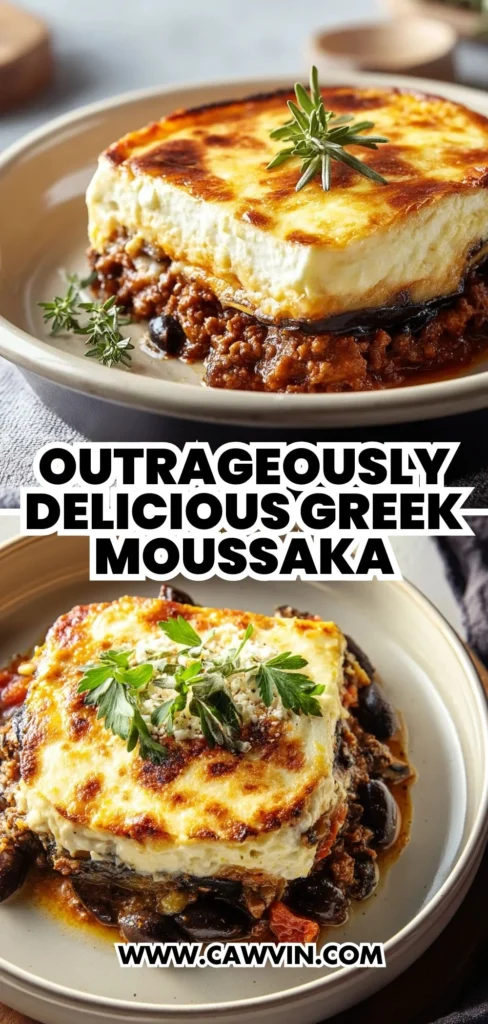
Outrageously Delicious Greek Moussaka
Ingredients
Equipment
Method
- Slice the potatoes, zucchini, and eggplants into circular disks.
- Heat the olive oil in a pan over medium-high heat and fry the vegetable slices until they are cooked and golden brown.
- Remove the fried vegetables from the pan and place them on paper towels to drain excess oil.
- In a large pot over high heat, add the olive oil, finely chopped onion, and minced garlic. Cook until the onion and garlic are soft and translucent.
- Add the beef mince and cook until it turns from red to brown, breaking it up as it cooks.
- Pour in the red wine and let it simmer until the liquid has mostly evaporated.
- Stir in the crushed tomatoes, salt, white pepper, ground cinnamon, ground nutmeg, sugar, thyme, oregano, bay leaves, and chopped parsley. Mix well and bring to a simmer. Reduce the heat and let it simmer for about 10 minutes.
- In another saucepan over medium heat, melt the butter. Gradually add the flour while continuously stirring until a smooth paste forms.
- Slowly add the milk while stirring constantly to prevent lumps, continuing until a thick, creamy texture is achieved.
- Stir in the egg yolks, nutmeg, and shredded Kefalograviera cheese until well combined.
- Continue to cook, stirring constantly, until the bechamel sauce thickens and begins to bubble. Remove from the heat.
- Preheat the oven to 165°C (fan-forced).
- Arrange the potato slices in a single layer at the bottom of a baking dish, season with salt and pepper, and sprinkle a handful of cheese on top.
- Add a layer of eggplant slices, season, and sprinkle with cheese.
- Layer the zucchini slices evenly, season, and sprinkle with cheese.
- Add a second layer of eggplant slices, season, and sprinkle with the remaining cheese.
- Pour the meat sauce evenly over the layered vegetables, spreading it out to cover the entire surface.
- Top with the bechamel sauce, spreading it evenly over the meat sauce.
- Bake in the preheated oven for 40 minutes or until the top is golden brown. Check from 30 minutes onwards to avoid overcooking.
- Let the moussaka rest and cool for a minimum of 30 minutes before slicing.
- Cut into portions, serve, and enjoy!